

Pocket superzooms are my favorite kind of compact cameras because they’re so portable and versatile. This guide was originally published in January of 2011 and this is the fourth version, written for the summer of 2013. I believe every camera company has introduced at least one new pocket superzoom camera this year and features, prices and performance have all changed. For those of you who are wondering what exactly I mean by “pocket superzoom”– it’s a point-and-shoot camera with a long zoom lens that will easily fit in your pants pocket. They’re perfect for travel, outdoor and all-purpose photography. The very first pocket superzooms had 10x zoom lenses but now most have 20x zooms and Sony even has a new pocket camera with a 30x optical zoom lens. Cameras with a mere 10x zoom now belong in the budget category. It blows my mind that I can buy a camera now with a 20x or 30x zoom lens and useable image quality that I can comfortably carry around in my pants pocket.
Shut up and take me to the cameras >>
What’s New With Pocket Superzooms?
Even though most people will consider the cameras in this guide point-and-shoots, that isn’t really an adequate description considering what they can do. Besides 20x or longer zoom lenses (see sample zoom photos, below), most high-end pocket superzooms have state-of-the-art backlit CMOS sensors, full HD video and built-in Wi-Fi. Many of them also have PASM manual shooting modes and the four top cameras in this guide can even record full HD video at 60 frames-per-second for slow-motion action video clips. Built-in GPS is also a common feature for top-of-the-line high-end pocket superzooms, as is full-resolution high-speed burst shooting (as fast as 14 frames-per-second). One of our top cameras has a touchscreen LCD display and one can even capture in RAW mode. Prices have also come down a bit. Prices for the best pocket superzooms range from about $325 up to $450, however I’ve also included one bargain camera that costs just $150.
 |
 |
 |
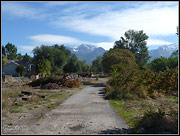
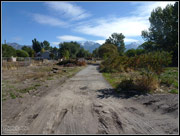
| These sample photos were taken with the Panasonic Lumix ZS10, one of our past pocket superzoom recommendations. They give an idea of the zoom range of a pocket superzoom camera – taken at a “normal” focal length (left), 24mm wide (middle) and 384mm full zoom (right). |
||
Why Choose A Pocket Superzoom Camera Over Your Camera Phone?
Most of you probably have a camera phone you use for casual point-and-shoot photography. Many of you probably even have a Smart Phone that takes really good pictures. So why should you buy a pocket superzoom when your camera phone is so good? There are three reasons: lens, control and sensor. Even if you’ve got the best Smart Phone (I’m talking to you iPhone 5 and Galaxy S4 owners), you’re still limited by awkward and minimal controls, a fixed lens and a small sensor (yes, size does matter – with sensors, anyway). The main selling point of a pocket superzoom is the huge zoom range. You can’t replicate that with any Instagram filter, with digital zoom or by cropping. And even though your Smart Phone has amazing image quality (for a Smart Phone), it can’t compete with any of the cameras in this guide. There’s a reason I carry a Smart Phone in one pocket and a pocket superzoom in the other. With a good pocket superzoom you’ll have a camera in your pocket that can take pictures good enough to print and frame. And the top pocket superzooms now all have built-in Wi-Fi with iOS / Android apps so you can wirelessly transfer photos from the camera to your phone (watch our digital camera Wi-Fi demo video to see it in action). If you get a camera without Wi-Fi you can add wireless functionality with an Eye-Fi SD card [link]. The bottom line is, with a Wi-Fi pocket superzoom camera you’ll be able to do everything you already do with your camera phone, but you’ll be able to do it with much better quality.
Why Choose A Pocket Superzoom Camera Over A Premium Compact Camera?
I’m sure there are some readers who are wondering why I would choose a pocket superzoom over a high-end compact camera like the Canon PowerShot S110 or the Sony Cybershot RX100. That’s a fair question. Most serious photographers would prefer premium compact cameras like the Panasonic Lumix LX7, Canon PowerShot G15, or the Nikon Coolpix P7700. Those cameras have great features and better image quality than a pocket superzoom but they’re too big for my taste. If a point-and-shoot camera doesn’t fit in my pants pocket, I’m not interested. It’s true that some premium compacts will fit in a pocket but those cameras all have relatively short zooms. Personally, I’m willing to trade some control and image quality for a camera that fits in my pocket and gives me a lot of reach. That way I always have a camera in my pocket that can pull in distant mountains, frame tight action shots, and give me the reach I need to get any photo when I’m traveling. If I need better image quality I’ll take the time to get out my DSLR.
Top Five Pocket Superzoom Digital Cameras:
Enough babbling about features and specs – let’s get to it! Here are my top five pocket superzoom cameras for 2013. These cameras were chosen based on features, popularity and my own experience. Most of them are top-of-the-line models with the longest zooms, best performance and latest features. However, I’ve also included one budget model with a 10x zoom. Each manufacturer has tried to give their camera a twist that sets it apart from the others. Which camera is right for you depends on your own particular tastes and needs. I recommend taking a close look each one so you can decide which camera fits you best.
first camera – Sony Cybershot HX50V >>
|


A few days after I published this article, Samsung announced a new pocket superzoom camera – the WB700. The new Samsung outdoes all of these cameras spec-wise. It’s got an 18x optical zoom lens, RAW shooting and full manual exposure controls. It’s also smaller than all but one of the cameras in this gude. You can check out the new Samsung WB700 here: http://www.photographyreview.com/reviews/blog/samsung-wb700-pocket-superzoom-camera-18x-zoom-raw/
Too bad this camera wasn’t available a bit sooner. It’s a pretty sure bet it will be included when I update this article, sometime next year.
I love you camera reviews. They are extremely helpful. I agree with you about super zoom pocket cameras. I’m in the market for a new camera and can’t make up my mind about Nikon Coolpix S8100 or S9100 and now the Samsung WB700 excites me.
I will be using this camera for mostly stills indoor/outdoor/ landscape, wildlife, sports, grand kids and my four Maltese dogs.
Ease-of-use is important as well as night shots and the best quality images. Can you help me decide?
Thank you
I’m glad you found this guide useful. I actually started working on updating the guide with more current cameras. I am hoping to have that posted today. I think it will tell you everything you need to know. Check back tonight or tomorrow and please post again if you have more questions
OK, I realized that no matter how great the iPhone 5′s camera is, I cannot possibly give up a superzoom. I still like my TZ4, but this little Canon is looking pretty good.
Good for you, Patia! And I agree about the Canon SX230 HS. It snuck past me when it was announced and I only really discovered it while I was researching this guide. My experience with the SD4500 IS plus the SX230 HS specs made a strong impression on me and I bought the camera before I finished the guide. I am very, very pleased with it
Personally do have a pocket size superzoom (Fujifilm Finepix F800EXR to be exact). The camera is a little rectangle that fits nicely into my pocket and takes reasonable pictures. The manual overrides are not very refined so I rely on automatic settings a lot.
Despite the quality gap, there is a number of people who are non-photographers and accepted the bottom-line of an image is not to reproduce a poster (piece of paper) on your wall. Pros still print their images but there are those who are satisfied with enough resolution for sending by E-mail. The iPhone is an all in 1 device. Some people have become very up to date in the trend of carrying “portable” devices. You tell them a desktop computer has more processing power than a laptop and finally an iPad they’d rather be carrying the smallest thing that can fit into their purse or briefcase.
In the old days we don’t have a choice that prints must be made from negatives or need a good projector for slides. But when a choice is given, photo enthusiasts would still carry bulky SLRs but the casual photographer for quick sharing wouldn’t mind an image taken with a phone even at less than half the resolution.
By the way, the Fujifilm Finepix F770EXR listed here is already the previous model. Since Nov. 2012 the F800EXR is already out with the same resolution and a bit of enhancement. Some stores are already selling the F770EXR at a discounted price…
Hi, i am looking for a great camera to take pictures while climbing. So small, quick autofocus, fast continous picture…i am not an expert but i have no budget constraint. any help? thanks
Daniele-
Any of the cameras in this guide would be a good fit for you. However, since you’re talking about climbing, where your camera might get banged around, I’d encourage you to look at our Outdoor & Waterproof Camera Guide. The rugged, waterproof point-and-shoots don’t have the long zoom that pocket superzooms do, but they can take a lot more abuse and they’ll still fit in your pocket. Most of them also have fast burst rates, too. Here’s a link to the Outdoor & Waterproof Camera Guide: http://www.photographyreview.com/reviews/outdoor-waterproof-digital-cameras